Sourdough is a journey; every loaf teaches you something new. The way is paved with countless hours of work, time and a lot of patience. But then , there is nothing more satisfying than slicing into a fresh, crisp homemade loaf. And the smell of freshly baked bread is just bonus.
Not all bread has to be bad for you. Homemade sourdough bread (made with a natural starter of wild yeast + bacteria) differs quite a bit from most commercial breads made with cultured baker’s yeast. The long natural fermentation changes the chemistry of the dough and can provide several health advantages:
Easier to Digest - The long natural fermentation in sourdough involves wild yeast and lactic-acid bacteria that partially break down starches, and gluten proteins before you eat the bread. This process is part of Lactic Acid Fermentation, which pre-digests some components of the flour, thus reducing your digestive workload. Some people with mild sensitivity to regular bread find sourdough easier on the stomach. Sourdough bread causes less bloating compared with fast-rise breads.
Lower Glycemic Impact - Sourdough fermentation produces organic acids that slow carbohydrate digestion. This results in slower glucose release into the bloodstream. This, it creates smaller blood sugar spikes compared with standard white bread. This can be beneficial for people managing Type 2 Diabetes or insulin resistance.
Better Mineral Absorption - Grains naturally contain phytic acid, which binds minerals like iron, zinc, and magnesium. The sourdough long fermentation process reduces this compound, improving nutrient absorption.
Natural Probiotic Activity (During Fermentation) - The bacteria in sourdough starters—such as Lactobacillus—create beneficial metabolites.
Fewer Additives - My homemade sourdough contains only unbleached strong bread flour, filtered water, sea salt and natural starter. Commercial bread often includes: dough conditioners, emulsifiers, preservatives and aded sugar.
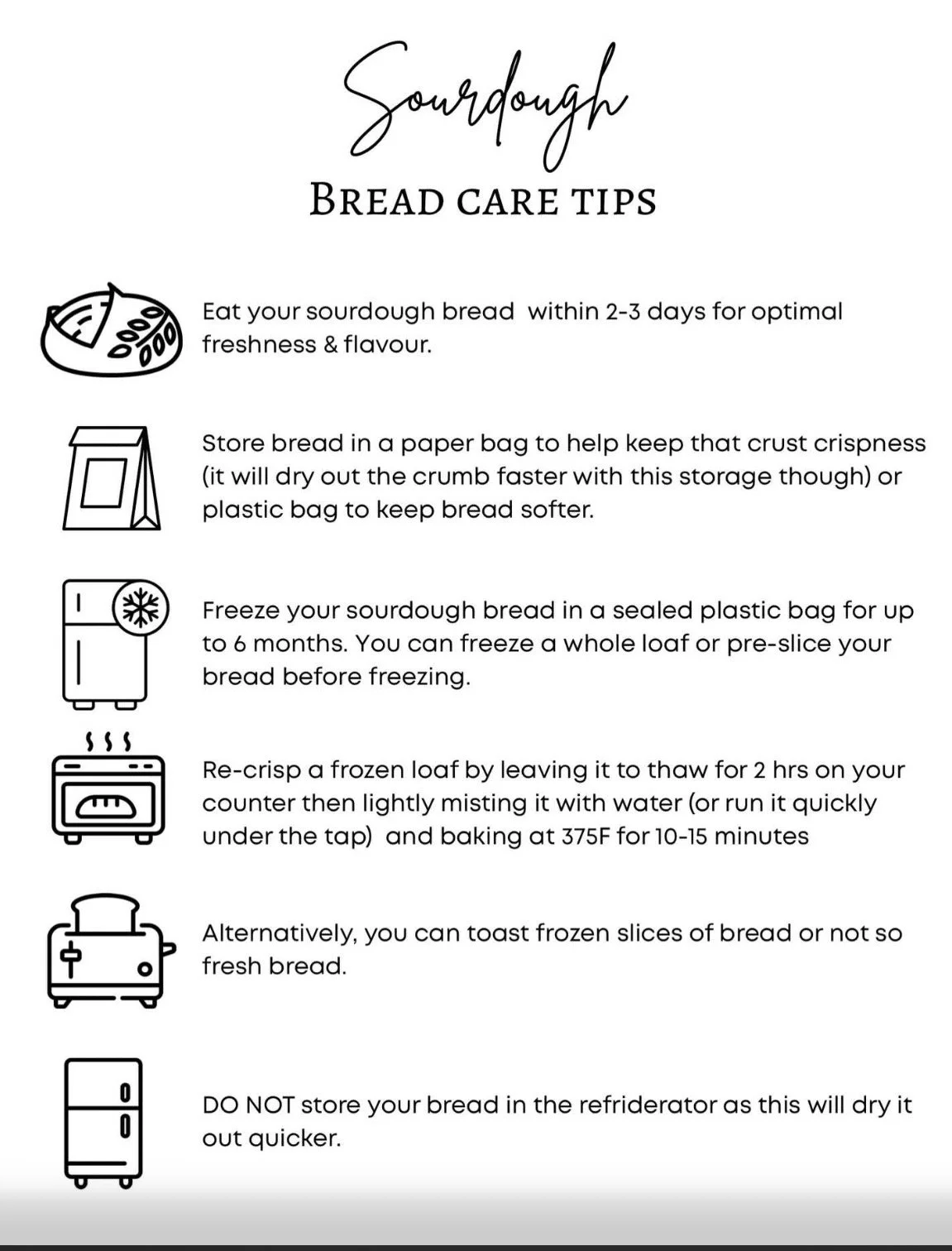
Enjoy it fresh or freeze. Yes, you can also freeze sourdough . It actually has some additional benefits:
Improved Health Profile: The freezing and thawing process (retrogradation) converts some digestible starches into resistant starch, lowering the bread's glycemic index.
Better Blood Sugar Management: Sourdough that is frozen, thawed, and toasted can reduce glycemic response by nearly 40% compared to fresh bread.
Enhanced Gut Health: Resistant starch acts as a prebiotic, feeding beneficial bacteria in the gut.
Besides the sourdough loaves and focaccia, all my pies and cookies are also made using long fermented sourdough discard for unique flavour and depth.
Support local, indulge a little, and treat yourself, you deserve it. Why sourdough?
*
Why sourdough? *